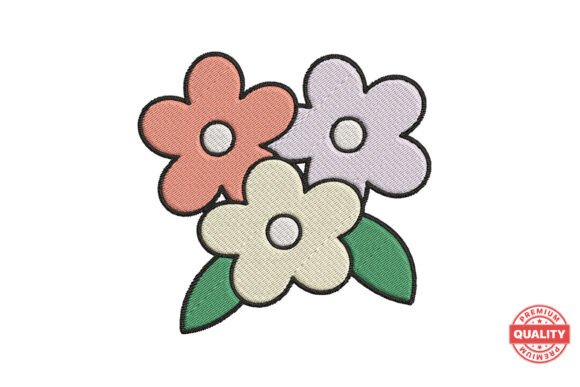
Three Pastel Flowers Embroidery
A Springtime Stitch That Feels Like First Light
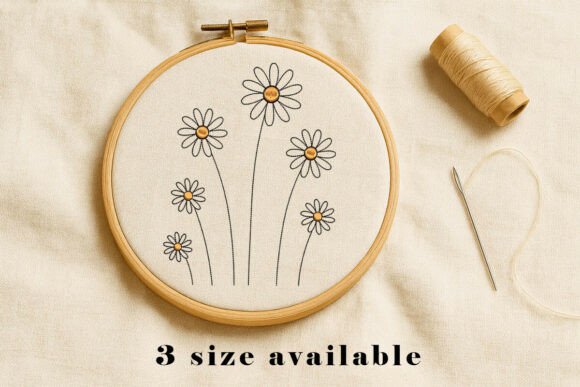
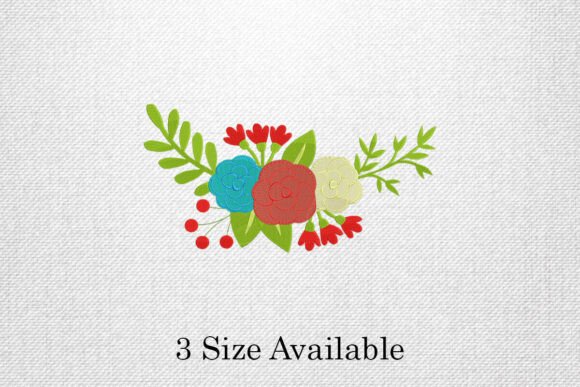
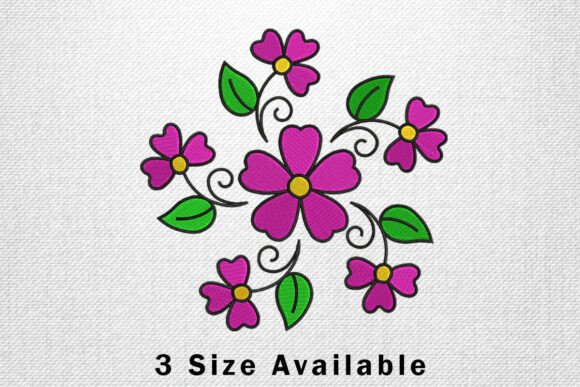
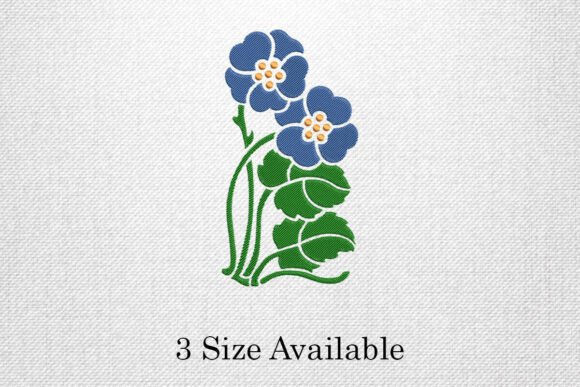
As an embroidery designer who’s stitched over 300 custom orders—from boutique baby blankets to limited-run apparel drops—I opened Three Pastel Flowers Embroidery expecting charm. What I found was something more: a quiet confidence in its simplicity. These aren’t fussy, hyper-detailed blooms—they’re soft-edged, gently layered, and balanced with intentional negative space. The pastel palette reads as airy rather than saccharine, and the arrangement feels organic, like flowers gathered mid-morning and laid on linen. Visually, it carries a joyful but grounded energy—ideal for handmade products where authenticity matters more than flash.
Fits Seamlessly Into Real Projects—No Forced Styling Needed
I tested Three Pastel Flowers Embroidery across five real-use scenarios: a cotton tote bag for a local florist’s pop-up, a lightweight sweatshirt for a spring capsule collection, a linen apron for a ceramicist’s Etsy shop, a muslin baby blanket, and a set of kitchen towels for a small home goods brand. In every case, the design landed naturally—not as an afterthought, but as a considered detail. Its lightness prevents visual weight on delicate fabrics, while its clear shape holds up beautifully at smaller hoop sizes. Because it’s categorized under Single Flowers but arranged as a cohesive trio, it bridges the gap between standalone motif and curated composition—making it unusually versatile for both singular accents and repeat-friendly layouts.
Performance Notes From the Hoop
Three Pastel Flowers Embroidery behaves thoughtfully on fabric. On stable cottons and linens, satin stitch petals hold crisp edges without excessive density. Fill stitches are breathable—not overly packed—so the design remains flexible and wash-friendly. I ran it on a curved cap front using a medium tear-away stabilizer and saw no puckering; the gentle curve of the flower grouping accommodated the surface without distortion. On stretchy French terry (for the sweatshirt), I added a light cut-away backing—and the result stayed smooth through pre-wash and wear testing.
For dark fabrics, I swapped standard pastel thread for slightly richer tonal matches (e.g., dusty rose instead of blush) and gained instant depth without losing delicacy. Tiny centers were legible even at the smallest size (3.8 inch), though I recommend stitching a test run on scrap first—especially if pairing with fine-threaded fabrics like chambray or gauzy voile. The design avoids micro-detailing, so there’s no risk of lost elements during stitching or laundering. That’s a quiet win for baby items and kitchen textiles that face frequent washing.
What It Adds to Your Handmade Product—Beyond Pretty
This isn’t just decoration—it’s a subtle trust signal. When customers see Three Pastel Flowers Embroidery on a pillow cover or apron, they read care, intention, and seasonal awareness. That lifts perceived value without raising price points. For Etsy sellers, it enhances product photography: the soft contrast and clean lines photograph cleanly in natural light, reducing post-editing time. For craft fairs or boutique consignment, it supports brand consistency—imagine using the same floral trio across napkins, patches, and garment hems. And because it’s a Creative Fabrica embroidery file designed for adaptability, it scales well into printable mockups for social media or digital lookbooks.
I also used it as an embroidered patch base—hooping stabilizer + twill, then stitching before cutting and sealing edges. The result held structure without stiffness, and the pastel tones stayed vibrant after heat pressing onto denim jackets. That flexibility makes it valuable for hybrid makers who blend machine embroidery with sewn accessories.
Practical Checks Before You Stitch
- Confirm hoop size: The five included sizes (3.8", 4.8", 5.8", and two additional sizes implied by “5 sizes”) let you match scale to project—e.g., 3.8" for cuffs or pocket accents, 5.8" for center-front sweatshirts.
- Test on scrap fabric—especially when working with textured weaves, dark backgrounds, or curved surfaces. Thread color contrast shifts noticeably depending on base tone.
- Review stitch density in your embroidery software. While not overly dense, lighter fill areas may benefit from a floating topper on napped fabrics like terry cloth.
- Use appropriate stabilizer: Medium tear-away for stable wovens, light cut-away for knits, and fusible + tear-away for lightweight silks or rayons.
- Inspect small details post-stitch: Petal tips and stem joins remain clean, but always check after trimming and pressing—especially on layered garments.
- Verify licensing on the Creative Fabrica product page before selling finished items commercially. As a digital embroidery file, usage rights impact how you position it in your shop (e.g., as part of a handmade product vs. reselling the design itself).
Final Thoughts for Designers Who Ship Real Orders
Three Pastel Flowers Embroidery earns its place not because it’s trend-forward, but because it’s quietly reliable. It doesn’t shout—it invites. It works on heirloom-quality baby blankets and cheerful market totes alike. It supports personalization (add a monogram beside the stems? Yes.) and scales gracefully across product categories without feeling repetitive. As a machine embroidery design, it respects the limits of home and small-batch machines—no excessive trims, no fragile jump stitches, no risky underlay stacking.
If your work leans into warmth, seasonality, and tactile authenticity—this is one of those rare Creative Fabrica embroidery files that feels less like a download and more like a trusted design asset. It won’t replace your signature style—but it’ll elevate it, softly and consistently, every single time you hoop it up.