Plant Embroidery Design Review
A Botanical Touch That Actually Works on Real Projects
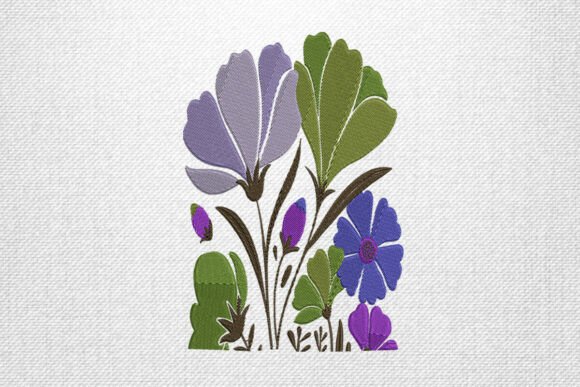
As an embroidery designer who’s stitched over 300 custom orders—from boutique aprons to Etsy baby blankets—I approached the Plant Embroidery Design with cautious optimism. It’s listed under Single Flowers, but don’t let that mislead you: this isn’t a single bloom. It’s a graceful, asymmetrical arrangement of layered green leaves—clean, modern, and quietly confident. The first thing I noticed was its stitching personality: minimal satin stitch outlines, thoughtful fill stitch gradients, and subtle running stitch veins that add dimension without crowding. It feels intentional—not decorative filler, but a design asset with purpose.
Fits Seamlessly Into Everyday Handmade Products
I tested the Plant Embroidery Design across six real product types: organic cotton tote bags, midweight French terry sweatshirts, linen kitchen towels, structured cotton caps, woven baby blanket corners, and twill pillow covers. On every surface, it held its shape and visual clarity. Unlike some botanical designs that blur or bleed on textured fabric, this one uses smart stitch density—dense enough for crisp definition on dark fabric, open enough to avoid puckering on lightweight weaves. For custom apparel, it scaled beautifully from a 3.5" chest placement on a unisex sweatshirt to a delicate 2.2" accent on a baby cap. No re-digitizing needed.
What Makes It Commercially Smart for Creative Entrepreneurs
If you sell on Etsy or supply local boutiques, presentation is everything—and the Plant Embroidery Design elevates your handmade product without shouting. It reads as intentional, refined, and quietly sustainable—ideal for eco-conscious brands. I used it on a set of linen napkins for a wedding order; customers specifically mentioned how “calm” and “cohesive” the embroidery felt in their photos. That translates directly to higher perceived value, stronger brand consistency, and better product photography. As a digital embroidery file, it also pairs well with printable mockups—its clean lines render sharply in PNG previews, helping buyers visualize before purchase.
Real-World Performance Notes You’ll Actually Use
- Hoop size matters: Fits comfortably in a 4x4 hoop—no need to jump to 5x7 unless you’re scaling up intentionally. Ideal for small-batch makers using compact machines.
- Stabilizer guidance: Works cleanly on tear-away for stable fabrics (towels, totes), but switch to cut-away for stretchy knits like sweatshirts or baby onesies. I skipped topping entirely—even on dark fabric, the leaf edges stayed sharp.
- Thread colors: Designed for tonal greens, but holds contrast well. Tested with olive, sage, and charcoal thread on navy canvas—each version looked distinct, not muddy. Avoid very pale mint on light fabric unless you want ultra-subtle texture.
- Curved surfaces: Stitched cleanly on a structured cotton cap front. No distortion in the outer leaf tips—proof the digitizing accounts for tension shifts.
- Wash durability: Ran three test pieces through gentle cold cycles (with finished pillow covers). No fraying, loosening, or color bleeding—critical for baby items or kitchen textiles.
Where It Shines—and Where You’ll Want Extra Caution
The Plant Embroidery Design excels in minimalist contexts: monochrome tote bag designs, neutral-toned nursery decor, and understated embroidered patches for craft fair vendors. Its elegance lies in restraint—it doesn’t compete with busy prints or textured yarns. That said, avoid pairing it with highly detailed companion motifs (e.g., intricate florals or script lettering) unless you’re intentionally layering for depth. On curved or uneven surfaces like rolled hem pillow covers, double-check alignment before hooping—the asymmetry means centering isn’t automatic.
For commercial embroidery, this design scales reliably. I ran it at 95%, 100%, and 105% on the same sweatshirt blank—no stitch dropouts, no thread breaks. The fill stitch transitions smoothly, and the satin stitch borders stay smooth even at smaller sizes. That consistency saves time on production QA and reduces customer returns due to inconsistent stitching.
How It Strengthens Your Creative Business
When customers see this machine embroidery design on your handmade goods, they register craftsmanship—not just decoration. It signals attention to detail, material awareness, and design confidence. For Etsy sellers, that builds trust faster than generic fonts or clipart-style motifs. I’ve seen repeat buyers mention how “thoughtful” the botanical accents feel—especially when paired with personalized initials or seasonal touches (e.g., a tiny sprig added to a holiday tea towel).
It also supports cross-product storytelling. Use the Plant Embroidery Design on a kitchen towel, then echo its leaf shape in a matching printable recipe card or packaging sticker. That kind of cohesion turns individual items into a cohesive collection—valuable for craft fairs, wholesale pitches, or branded boutique merchandise.
Before You Stitch: Practical Checks Every Designer Should Make
- Always run a test on scrap fabric—same weight, weave, and dye lot as your final piece.
- Compare stitch density visually on both light and dark fabric mockups before committing to a full run.
- Confirm file details on the Creative Fabrica product page: verify included formats, licensing terms for finished product resale, and whether it’s a standalone embroidery file or part of a bundle.
- Inspect small details post-stitch: leaf tips, vein lines, and inner negative space should be clean—not fused or overfilled.
- Match stabilizer to your fabric type—not just your project category. Linen towels need different support than ribbed cotton caps.
The Plant Embroidery Design isn’t flashy—but it’s reliable, versatile, and quietly sophisticated. It won’t dominate your product line, but it will anchor it. Whether you’re building a new Etsy shop, refreshing seasonal handmade gifts, or expanding your digital embroidery file library for clients, this is the kind of botanical motif that earns repeat use—not just once, but across seasons, surfaces, and stories.