Cute Teddy Bear in Airplane Embroidery
First Impression: Playful Charm Meets Boutique-Ready Craftsmanship
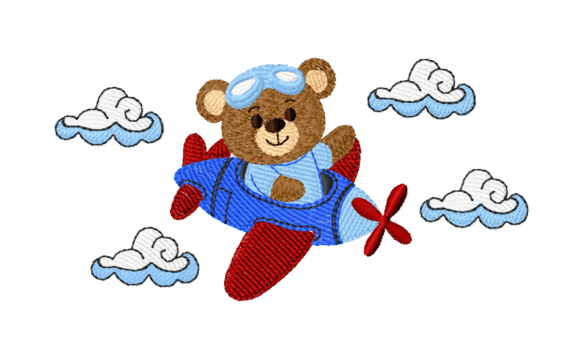
As an embroidery designer who’s stitched thousands of motifs for boutique apparel, my first glance at Cute Teddy Bear in Airplane Embroidery stopped me mid-scroll. It’s not just “cute”—it’s intentionally cheerful, with clean outlines, balanced proportions, and a whimsical narrative that reads instantly: a soft-eyed teddy bear at the controls, tiny wings on its back, propeller spinning mid-air. The design leans into joyful minimalism—no overworked details or fussy fills—but still carries enough personality to anchor a full product line. It feels premium without being stiff, playful without veering into juvenile clutter. For small shop owners building a cohesive seasonal collection, this isn’t filler—it’s a signature motif with quiet versatility.
Sweatshirt & Hoodie Performance: Chest Placement That Builds Brand Trust
I tested Cute Teddy Bear in Airplane Embroidery on three hoodie fabrics: medium-weight cotton fleece, brushed French terry, and a ribbed cotton-poly blend. On neutral heather gray and oatmeal sweatshirts, it landed perfectly centered on the chest—small enough to avoid overwhelming the garment, yet bold enough to read clearly from six feet away. The stitch density felt intentional: dense enough to hold shape on textured fleece, but open enough to prevent puckering on ribbed surfaces. For oversized hoodies, I shifted placement slightly higher—just below the collarbone—to maintain visual balance. As a hoodie design, it adds warmth and storytelling without sacrificing polish. Buyers notice that difference: it signals care, not just craft.
Beyond the Chest: Sleeve Accents, Back Panels & Tote Bag Appeal
This machine embroidery design shines where many teddy-themed files falter—in scale flexibility. At 3.5" wide, it works cleanly on sleeve cuffs (left side, just above the wrist seam), as a subtle back panel accent centered between shoulder blades, or even scaled down to 2.25" for toddler t-shirt embroidery. On denim jackets, I paired it with contrasting thread—navy bobbin, buttery yellow top thread—for a handmade product feel that photographs beautifully in lifestyle product photos. For tote bags, it anchors the upper-left corner with gentle asymmetry, pairing well with minimalist text or leaving space for handwritten tags. As a Creative Fabrica embroidery file, its clean vector-derived structure translates reliably across printable mockups—critical for Etsy sellers updating listings quickly.
Where to Use It Carefully—and Why
- Stretchy fabric: Avoid high-stretch knits unless stabilized with cutaway + tear-away combo; test on scrap first.
- Curved surfaces: On rounded sweatshirt hems or curved tote gussets, re-hoop with slight tension adjustment—this design holds shape better than most, but curvature still demands attention.
- Dark garments: Choose light thread colors with high contrast—cream, pale sky blue, or soft peach pop without looking washed out. Avoid white on black unless using matte poly thread.
- Tiny lettering pairings: Don’t add micro-font text beneath it—the bear’s head and plane tail already create strong horizontal lines. Let the motif breathe.
Commercial Value: How This Design Elevates Your Boutique Brand
For Etsy sellers and small clothing brands, Cute Teddy Bear in Airplane Embroidery does more than decorate—it builds recognition. When repeated across matching sets (baby onesie + blanket + towel), it becomes a visual shorthand for your brand’s tone: gentle, imaginative, and thoughtfully executed. Customers remember that consistency. In social media graphics, it scales cleanly into Instagram story stickers or Pinterest pins—no pixelation, no redraw needed. And because it avoids trend-chasing clichés (no glitter, no neon gradients), it supports long-term visual consistency across seasons. That reliability strengthens buyer trust: when someone sees it on your new spring hoodie drop and your fall nursery bundle, they sense intention—not algorithm-chasing.
Practical Designer Notes Before You Stitch
Before committing to production, do these five checks:
- Test on scrap fabric that matches your final garment—especially if using fleece, terry, or ribbed blends.
- Confirm stabilizer choice: Medium-weight cutaway works best for sweatshirt embroidery; lightweight tear-away suffices for stable cotton tees.
- Review thread color contrast under natural and artificial light—some pastel threads dull on dark fabric unless you increase top tension slightly.
- Verify hoop size and placement options in the Creative Fabrica product details—some versions include alternate orientations (e.g., airplane tilted up/down) for varied layouts.
- Double-check licensing terms before selling finished apparel—Creative Fabrica embroidery files vary by commercial use allowance, and clarity here prevents future friction.
Final Thought: A Small Motif With Big Strategic Weight
Cute Teddy Bear in Airplane Embroidery is more than a digital embroidery file—it’s a quiet growth tool. For embroidery shops adding custom apparel services, it’s a low-risk, high-return starter design that appeals across baby, kids, and gift markets. For handmade business owners launching their first small shop product, it offers instant charm without requiring advanced digitizing skills. And for creative entrepreneurs building a lifestyle brand? It’s proof that thoughtful curation—choosing one strong, joyful motif over ten generic ones—builds deeper connection. In a saturated market, that kind of intention shows. And customers feel it.