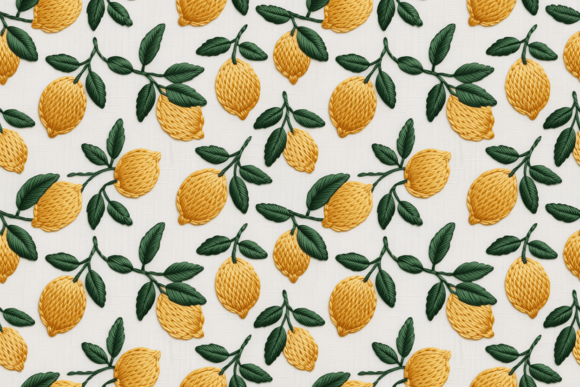
Lemon Embroidery Seamless Pattern
First Impressions: Bright, Balanced, and Unexpectedly Timeless
As an embroidery designer who’s stitched over 2,000 custom orders for baby boutiques, wedding studios, and Etsy shops, I opened Lemon Embroidery Seamless Pattern expecting cheerful citrus—but what landed was something richer: a quietly elegant rhythm of lemons, leaves, and subtle negative space that breathes like hand-drawn linocut. It doesn’t shout “summer” or “kitchen”—it whispers “thoughtful,” “handmade,” and “made just for you.” The motif feels both modern and classic, with clean outlines and gentle organic flow. There’s no forced cuteness or over-rendered gloss—just confident simplicity that reads beautifully at 3”, 6”, or even 12” repeats. For personalized gift makers, that balance is gold: it appeals to minimalist parents, vintage-loving brides, and small shop owners who value quiet sophistication over trend-chasing.
Where This Pattern Truly Shines in Real-World Gifting
Lemon Embroidery Seamless Pattern isn’t just decorative—it’s emotionally functional. On a soft cotton baby blanket? It becomes a gentle, gender-neutral heirloom—no clichéd rattles or ducks, just warmth and quiet joy. Stitched onto a linen pillow cover for a nursery? It adds texture without overwhelming the space. As a border on a kitchen towel? It elevates everyday utility into something giftable and Instagram-worthy. Wedding gift designers will love how it adapts: stitch it subtly along the hem of a monogrammed napkin set, repeat it across a cotton apron for the couple’s first cooking class, or scale it down as a delicate corner motif on a framed embroidery hoop keepsake.
For Etsy sellers and craft fair vendors, this pattern works double duty: it photographs beautifully (soft shadows, clear contrast), scales cleanly across product mockups, and reads instantly as “handmade” — not digital, not mass-produced. Customers scrolling for a personalized gift don’t pause on complexity—they pause on feeling. And Lemon Embroidery Seamless Pattern delivers that pause: warm but refined, playful but grounded, sweet but never saccharine.
Smart Applications Across Your Product Line
- Baby embroidery: Ideal for swaddles, burp cloths, and crib sheets—especially when paired with ivory, oat, or sage thread colors.
- Wedding gift: Works as a subtle repeat on cocktail napkins, guest book covers, or linen tote bags for the bridal party.
- Nursery decor: Perfect for wall hangings, mobile accents, or embroidered name banners—its seamless nature means no awkward breaks at seams.
- Small shop product: Easy to brand: add a tiny monogram or date in the center of one lemon for ultra-personalized baby or anniversary gifts.
- Custom embroidery previews: Use the PNG to build realistic printable mockups—customers love seeing how the repeat flows across a full towel or tote before ordering.
Where to Use With Care—And Why
This design shines brightest on stable, medium-weight fabrics with smooth surfaces. That said, real-world stitching demands honesty: Lemon Embroidery Seamless Pattern needs thoughtful placement on certain materials.
Avoid dense repeats on thick terry cloth towels unless you reduce stitch density and use heavy cutaway stabilizer—the leaves may blur or pucker. Skip stretchy baby onesies entirely; the seamless repeat relies on consistent tension, and knit fabric distorts easily. Curved surfaces (like rounded tote bag gussets) require careful hooping and possibly manual repositioning between repeats. On dark fabric, test thread contrast early—light yellow or cream thread may vanish unless you add a white underlay or choose a matte gold metallic for lift. And while the lemons are charming, their smallest details (veins on leaves, fine stem lines) can disappear on textured linen or heavily brushed cotton unless you confirm stitch clarity on scrap first.
How It Builds Trust—and Turns Browsers Into Buyers
In handmade markets, perceived quality drives pricing power. When customers see Lemon Embroidery Seamless Pattern on your embroidered towel or pillow cover, they don’t just see lemons—they see intentionality. The seamless flow signals technical skill. The balanced spacing says “this wasn’t rushed.” That translates directly to higher cart values, fewer returns, and more repeat buyers asking, “Can you do this in mustard?” or “What if we add our baby’s name here?”
For digital product sellers offering Patterns and Graphics, this file’s versatility boosts its commercial appeal: it’s equally useful for print-on-demand fabric designers, SVG cutters, and embroidery digitizers building cohesive collections. Just remember—if you’re selling finished embroidered goods using this design, verify commercial licensing applies. “PNG AVAILABLE” means you’ll need to confirm usage rights before listing on Etsy or wholesale platforms.
Practical Embroidery Notes You’ll Want Before First Stitch
Before committing to customer orders, run these checks:
- Test on scrap fabric matching your intended product—linen, terry, quilting cotton, or twill—each behaves differently under needle and thread.
- Check thread color contrast on both light and dark fabric mockups. Lemon yellow on ecru reads joyful; on charcoal, it reads graphic—choose intentionally.
- Confirm hoop size compatibility. Seamless patterns often require larger hoops (5x7" or bigger) for clean repeats—don’t assume it fits your standard 4x4.
- Review stitch density. High-density fills may overwhelm lightweight fabrics; adjust underlay or reduce fill percentage if needed.
- Use proper stabilizer. Medium-weight cutaway for stable wovens; tear-away + topping for textured surfaces.
- Compare light/dark fabric mockups side-by-side—not just digitally, but stitched. What looks crisp on screen may soften after embroidery.
- Inspect small details post-stitch. Are leaf tips sharp? Does the lemon stem hold definition? If not, tweak tension or needle size.
- Verify commercial licensing before selling finished products—especially if marketing as “custom embroidery” or bundling with physical goods.
At its core, Lemon Embroidery Seamless Pattern isn’t just another graphic—it’s a quiet invitation to slow down, choose meaning over mass, and stitch something that feels like care made visible. Whether you’re embroidering a baby’s first blanket or curating a wedding suite for a couple who collects vintage citrus peelers, this pattern holds space for authenticity. And in today’s handmade market? That’s not just SEO-friendly—it’s soul-friendly.