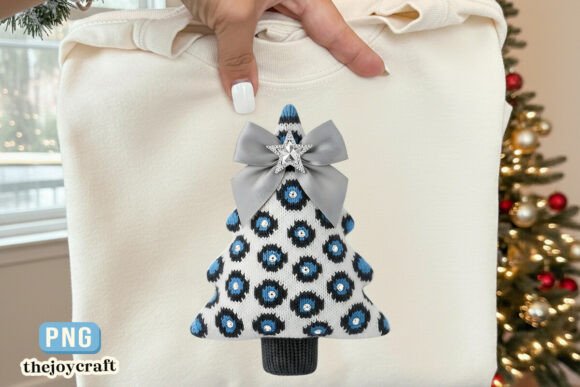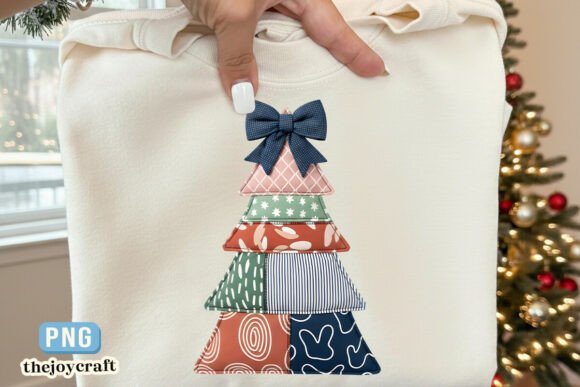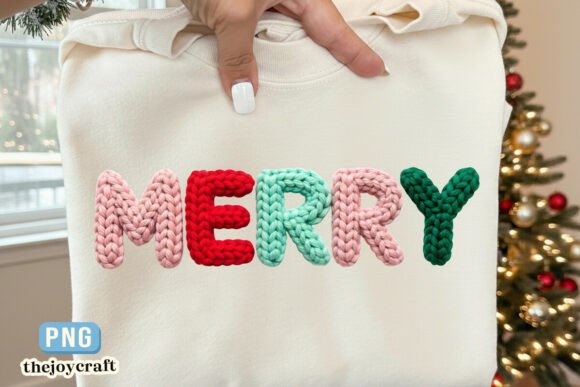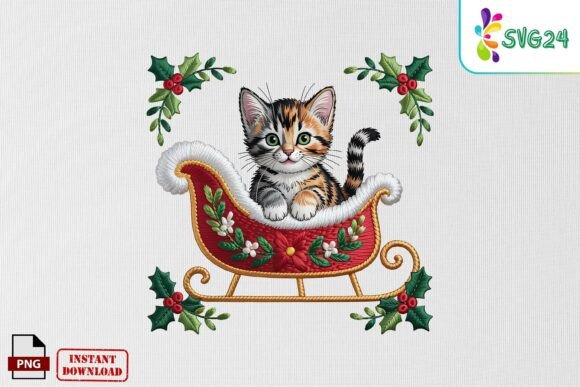
Latch Yarn Faux Embroidery Christmas PNG
A Designer’s Real-World Review for Small Business Merchandise
As an embroidery designer who’s digitized over 2,000 commercial projects for cafés, boutiques, bakeries, florists, and handmade brands, I approach every digital embroidery file with two questions: Will it translate cleanly to thread? and Will it strengthen the client’s brand—not distract from it? When I first saw the Lintch Yarn Faux Embroidery Christmas PNG, my instinct was cautious optimism. The title signals a specific aesthetic—“faux embroidery” suggests intentional texture and craftiness, while “Latch Yarn” evokes hand-hooked warmth and tactile charm. For small business owners building memorable, human-scaled branding, that’s promising—but only if the execution supports real-world production.
First Impression: Playful, Handmade, and Seasonally Warm
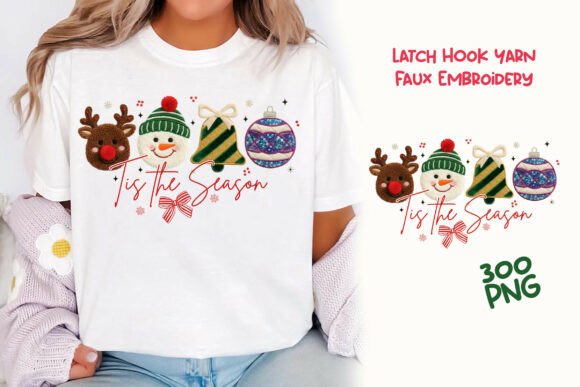
The description—“adorable reindeer, snowman, bell, and ornament textures”—immediately sets a friendly, approachable tone. This isn’t sleek corporate holiday branding; it’s the kind of design that feels at home on a local pet shop’s staff apron or a ceramic studio’s limited-edition tote bag. It leans into rustic charm without sacrificing clarity, and its “faux embroidery” styling implies subtle dimension—ideal for businesses that want to signal authenticity and craftsmanship. For Etsy sellers, handmade brands, and creative studios, that visual language builds instant trust. Customers don’t just see a holiday graphic—they recognize a shared value: care, detail, and intentionality.
Where It Shines in Commercial Embroidery Use
The Lintch Yarn Faux Embroidery Christmas PNG excels where small businesses need versatility: embroidered patches, chest logos, sleeve accents, cap fronts, tote bag marks, apron embroidery, and product packaging accents. Its balanced composition—central motif with supporting elements spaced thoughtfully—holds up well when scaled to 2.5–3.5 inches, the sweet spot for uniform chest patches and boutique tote branding. On staff uniforms (think bakery aprons or florist smocks), it reads clearly at arm’s length and adds seasonal cheer without overwhelming the garment. As a cap embroidery design, it works best on structured front panels—not curved visors—where the textured elements retain legibility.
For custom apparel creators and digital embroidery file buyers, this design functions as both a standalone statement and a cohesive part of a broader seasonal collection. Pair it with minimalist monograms or handwritten tags in your design assets, and you’ve got a unified holiday merch line—from coffee sleeves to gift tags—that feels curated, not cluttered.
Use With Intention: Key Considerations for Production
Like any strong design, the Lintch Yarn Faux Embroidery Christmas PNG demands thoughtful application. Its faux-textured elements—especially the snowman’s knit scarf or ornament highlights—rely on contrast and spacing to read as “stitched,” not muddy. That means:
- Avoid ultra-small patch sizes (<2 inches) unless simplified—fine details like bell clappers or reindeer antler tips may collapse under dense stitching.
- Test on dark or textured fabric first: The design’s charm lives in tonal variation. On heavy twill or fleece, low-contrast thread colors can mute its handmade effect.
- Cap embroidery requires clean outlines: Curved surfaces compress stitch paths. Prioritize versions with reinforced outer edges and minimal interior texture for front-panel use.
- Frequent-wash items need smart stitch density: High-density fills look lush on tote bags but risk stiffness and wear on aprons or work shirts. Adjust underlay and reduce fill density for longevity.
Brand Identity Impact: More Than Just Holiday Cheer
When integrated intentionally, the Lintch Yarn Faux Embroidery Christmas PNG does more than mark the season—it reinforces brand identity. A local café using it on barista aprons tells customers, “We’re warm, attentive, and proud of our craft.” A pet brand applying it to holiday bandanas says, “We celebrate joy—and we treat your pet like family.” That emotional resonance lifts perceived product value and deepens customer engagement. Unlike generic clipart-style T-shirt designs, this has personality baked in—making it ideal for small business merch that must stand out on crowded shelves, market tables, or Instagram feeds.
Crucially, it supports visual consistency across touchpoints. Used as a tote bag design today, then reinterpreted as a simplified embroidered patch for next year’s staff gifts, it becomes a recognizable motif—part of your brand’s visual vocabulary, not just seasonal decoration.
Practical Notes Every Embroidery Designer Should Apply
Before digitizing or stitching, run these checks:
- Convert the Lintch Yarn Faux Embroidery Christmas PNG to grayscale—does the hierarchy hold? If shadows and highlights vanish, adjust contrast pre-digitizing.
- Scale it down to 2 inches and inspect spacing: Are reindeer antlers touching the bell? Does the snowman’s base separate cleanly from the text? Tight spacing causes thread nesting.
- Review thread color contrast—especially for light-on-light or dark-on-dark applications. Faux embroidery relies on tonal shifts, not just hue.
- Confirm hoop size compatibility. If your smallest standard hoop is 4×4”, will the design fit comfortably—or require repositioning mid-stitch?
- Test on actual fabric: Stabilizer choice (cutaway vs. tearaway) changes how texture reads. A soft knit may swallow delicate outlines; a stiff canvas may exaggerate them.
- Always create a printable mockup for client approval—especially for boutique merchandise or Etsy branding. Visual context prevents misaligned expectations.
- Compare it beside your other design assets. Does it harmonize with your logo, typography, and existing holiday graphics—or clash in weight or style?
- Verify commercial licensing. Since this falls under T-Shirt Designs and Graphics, confirm usage rights cover embroidered patches, physical product labeling, and resale—not just digital display.
Ultimately, the Lintch Yarn Faux Embroidery Christmas PNG isn’t just another holiday graphic. It’s a strategic tool for small business owners who understand that branded merchandise isn’t about filling space—it’s about extending voice, values, and warmth into the physical world. When used with intention, it transforms everyday items—caps, totes, aprons—into quiet ambassadors of your brand story. And in today’s market, where handmade presentation and authentic connection drive loyalty, that’s not decorative. It’s essential.