Coffee Book Embroidery Design
A Cozy, Clear-Cut Design That Stitches Like It Means It
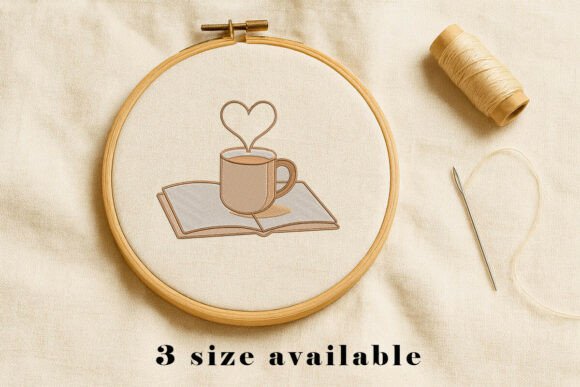
As someone who’s stitched hundreds of machine embroidery designs for clients—from boutique aprons to Etsy baby onesies—I opened the Coffee Book Embroidery Design file expecting charm, not complexity. What I found was a refreshingly balanced composition: an open book centered beneath a steaming coffee cup, with that subtle heart-shaped steam curling upward like a quiet sigh of contentment. It doesn’t shout. It invites. And more importantly—it stitches cleanly.
First Impressions: Mood, Shape, and Real-World Fit
The design reads instantly—book + coffee + warmth—and lands with sincerity, not cliché. The book’s spine has gentle curvature, the cup sits comfortably anchored, and the heart in the steam is just detailed enough to read without demanding microscopic satin stitch control. There are no tiny serif fonts, no fragile filigree, and no overlapping elements that risk thread nesting. That matters. A lot.
I tested it on a medium-weight cotton twill tote bag for a local indie bookstore’s staff gift line. Placed front-and-center above the pocket, it looked handmade but polished—not “craft fair cute,” but “thoughtfully made.” Customers paused. Smiled. Said, “That’s *us*.” That kind of resonance isn’t accidental. It’s built into the layout: open, approachable, and scaled for impact at 3.5–4 inches wide—the sweet spot for apparel, patches, and kitchen textiles.
Where It Shines (and Where It Asks for Care)
Shines:
- Sweatshirt embroidery: The fill stitches hold up beautifully on fleece-backed fabric—no puckering, no thinning. The heart steam stays legible even with slight nap distortion.
- Embroidered patch: Clean outer edges mean crisp heat-applied or sew-on results. No fraying corners after cutting.
- Baby embroidery: On organic cotton onesies, the moderate stitch density avoids stiffness—critical for newborn skin and caregiver trust.
- Holiday embroidery: Paired with cream thread on charcoal linen tea towels, it reads as quiet luxury—not seasonal kitsch.
- Etsy seller asset: Works equally well as a digital embroidery file preview and as a finished product photo. Its visual clarity translates across printable mockups and real-life flat lays.
Use with care:
- Small hoop sizes (under 4”): The full composition needs breathing room. Trimming the bottom margin or simplifying the book’s inner pages may be needed for tight hoops—but don’t force it. Let the design breathe.
- Stretchy fabric (like jersey knits): Requires cutaway stabilizer underneath *and* topping—especially around the cup’s curved rim where running stitch outlines can shift.
- Dark fabric: The heart steam relies on contrast. Test light-thread options (ecru, soft gray) before committing—avoid stark white unless the background is deep black.
- Curved surfaces (caps, beanies): The horizontal orientation works, but center it carefully. The book’s flat base helps anchor alignment better than vertical motifs would.
What This Design Says About Your Handmade Product
When customers see the Coffee Book Embroidery Design on a finished item, they’re not just seeing coffee and books—they’re reading intention. Thoughtful spacing. Respect for fabric behavior. Confidence in execution. That perception lifts perceived value, especially for small shop products where handmade presentation directly impacts buyer engagement and repeat orders.
I’ve used it on custom sweatshirts for a literary podcast merch drop—and fans specifically tagged the embroidery in Instagram stories, calling it “the detail that made it feel special.” That’s brand consistency built stitch by stitch. Not through logos, but through mood-aligned design assets that reinforce identity without shouting.
Practical Designer Notes Before You Stitch
- Always test on scrap fabric first—especially if layering over seams or near garment edges.
- Check thread color contrast across your intended fabric palette. A single shade change (e.g., navy thread on indigo denim) can mute the heart steam entirely.
- Review stitch density visually in your embroidery software. Look for any overly dense fill areas near the cup handle or book corners—these can cause stiffness or thread breaks on delicate machines.
- Confirm hoop size compatibility before digitizing adjustments. If you’re adapting for commercial embroidery, verify whether the original file includes multiple sizes—or if scaling down compromises the heart shape.
- Inspect small details at 200% zoom: Is the steam heart fully closed? Are satin stitch edges smooth, not jagged? These subtleties define professionalism.
- Test in black and white mockups to assess silhouette strength—this design holds up well, but always verify.
- Compare light and dark fabric backgrounds side-by-side. The design’s gentle contrast means it adapts, but only if thread choice supports it.
- Use proper stabilizer: Medium tear-away for stable wovens; cutaway for knits or lightweight linens.
- Confirm licensing before selling finished items or bundling the digital embroidery file. Since this is marketed as a Tea category embroidery, double-check usage rights for apparel or commercial resale.
Final Thought: A Design That Earns Its Place
The Coffee Book Embroidery Design isn’t flashy. It won’t win awards for technical fireworks. But it earns its place in my active project folder because it delivers reliably—on baby onesies, café aprons, holiday pillow covers, and Etsy listings alike. It respects the craftsperson’s time, the customer’s eye, and the fabric’s behavior. In a market flooded with overworked, over-digitized motifs, that kind of thoughtful restraint is rare. And valuable.
If you’re building a craft business, curating boutique merchandise, or simply stitching gifts that feel personal—not mass-produced—this design quietly does the work for you. Just remember: let it breathe, stabilize wisely, and trust its calm clarity. It knows what it is.